A Piano Played By Ear is an online film screening program exploring power structures, social systems, and the imposed divide between antithetical concepts that shape how we approach reality.
The selected video works question the existing patterns in our understanding of gender, identity, history, culture, nature, class, and race – often based on binary codes and normative thinking. Through a shift in the point of view, the inversion of roles, or the unveiling of hidden dynamics, they suggest a twist of perspective that challenges the feeling of self-righteousness in the regulated social sphere.
By presenting a variety of expressions, formats, and storytelling techniques, the program invites the viewers to put the autopilot on hold for a moment and open up to alternative narratives.
The program featured 11 video works and ran throughout 2023 on the online platform ArtViewer.
Featured artists and works
JAN 31 – FEB 22
Maria Kapajeva, Test Shooting, 2016
HD video, single screen, stereo, subtitled, 11 min, edition of 5+AP
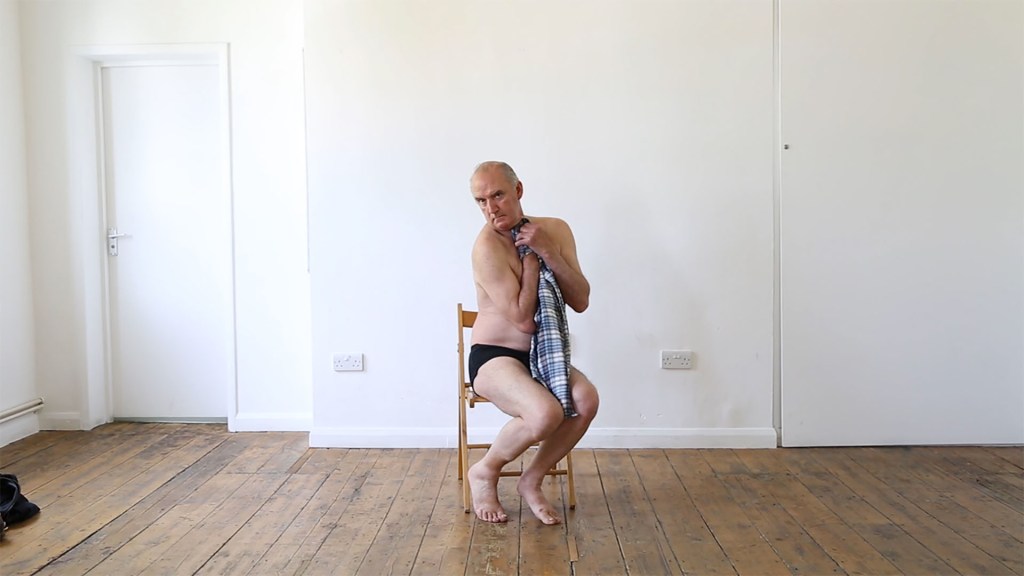
Through a straightforward approach and plain tone, Maria Kapajeva’s Test Shooting questions the stereotypical presentation of female attractiveness created by patriarchal objectified culture.
We see a middle-aged man who partly gets undressed while modelling at a photo shoot in an unadorned studio setting. He strikes various poses following a set of instructions given by the artist from her position behind the camera. The directions are excerpts from matrimonial websites instructing Russian women in search of a Western husband on how to photograph themselves for “the best match”.
The video is recorded with no prior rehearsal, which results in an unedited immediacy between director and actor. The spontaneity of their interaction, combined with the temporary reversal of positions, sets a question mark on the heteronormative definition of desire and intimacy and the nature of sexual identity.
The video is recorded with no prior rehearsal, which results in an unedited immediacy between director and actor. The spontaneity of their interaction, combined with the temporary reversal of positions, sets a question mark on the heteronormative definition of desire and intimacy and the nature of sexual identity.
mariakapajeva.com
MARCH 7 – 30
P L A T E AU R E S I D U E, Sub Persona, 2019
HD video, single screen, subtitled, 20:25 min
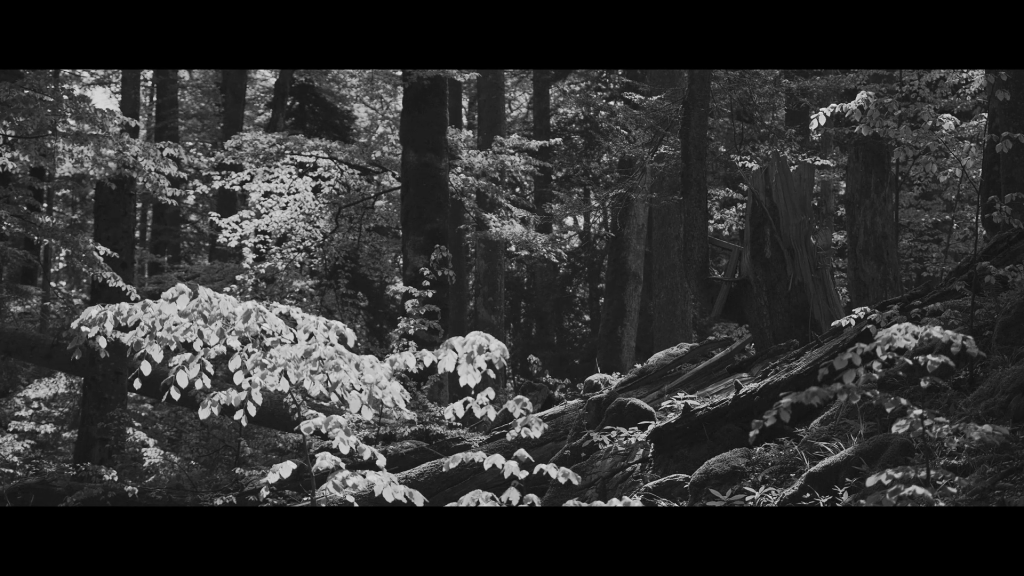
The research project Sub Persona focuses on the implications and ethics of forest management.
For millennia, elaborate inter-species relationships and energy flows have allowed forest ecosystems to adapt successfully to climate shifts and natural cataclysms. However, human impact – from the first settlements to contemporary industrialized deforestation – has interrupted this balance and decreased the extent, quality, and condition of the forest’s self-regulatory mechanisms.
In recent years, research on virgin forest remnants in central Europe has been crucial for understanding these mechanisms, which has helped improve the handling of managed forests.
Sub Persona emphasizes the importance of developing modern and sustainable management methods that consider the forest’s multiple functions on the environmental, economic, recreational, and cultural levels. Through a combination of documentary techniques and sensory perception, the video offers insight into the complexity of one of the planet’s oldest ecosystems and encourages a reflection on our shared responsibility towards its survival.
APRIL 5 – 26
Robert Carter, Notes on Dad, 2020
HD video and sound, single screen, 8:03 min
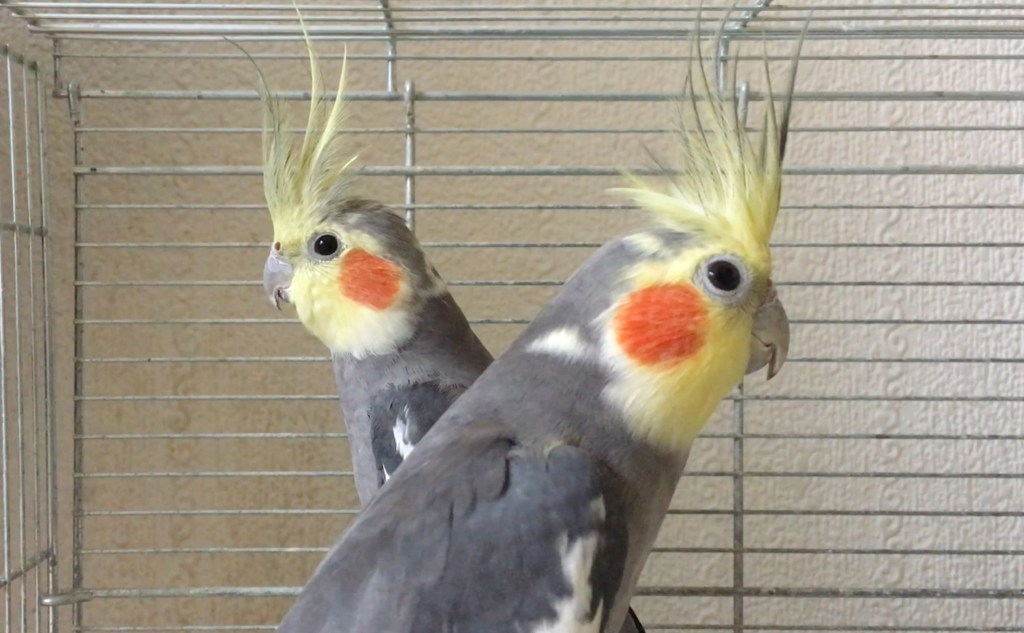
Shot on iPhone, Notes on Dad depicts the artist with his sister cleaning their father’s apartment together. A soundtrack with the artist’s voice gives insight into his experiences of growing up with an alcoholic father.
While rooted in a deeply personal story, the video opens up a larger conversation about how we care for ageing parents in an ever-more individualised society. Why is elder caregiving still primarily a woman’s responsibility? What are the psychological implications of looking after a person who has been a source of shame and frustration during the delicate years of emotional development?
Traditional household structures have radically changed over the past few decades and adult children experience feelings of ambivalence; regretting the loss of their independence in the role of caregiver whilst fearing their parents lack sufficient emotional support. As the population ages in most Western countries, many questions on how to face the most formidable demographic challenge of the near future remain unanswered.
MAY 5 – 31
Chiara Bugatti, Brute Force, Il Bigio (Foolish), 2021

HD video and sound, single screen, subtitled, 14:53 min
The protagonist in the film is the smallest particle of calcium carbonate lodged inside Era Fascista: the 1932 massive sculpture by Arturo Dazzi, made from a single block of Carrara marble, which used to be the centrepiece in the main square of Brescia, Italy. The monument was removed in 1945 and relocated to the city’s outskirts until a decade ago, when it was restored, wrapped in plastic and a container was built around it. Now that the 7.5-meter tall and 52-ton heavy sculpture erected by Mussolini is tucked away in an undisclosed area contaminated by toxic waste, the absurdity of man’s vanity mercilessly appears.
The tiny particle’s only desire is to be set free, dissolve and return to being sand. And eventually, it will, as humanity’s resistance against mortality seems to drive it to actions that enhance the speed of its own collapse. The belligerence of fascist masculinity, the invasiveness of marble mining and the contamination of the ground where the “Bigio” lies, caused by a former pesticide manufacturing plant, are, for the artist, multiple sides of the same coin.
Consumerism has developed a tendency to want to separate ourselves from the natural world. Giving language—a soundless, timeless voice—to natural elements in their most basic form is an attempt to flatten the hierarchical system where human development and progress are consistently prioritized.
JUNE 7 – 28
Hannibal Andersen, Art in Saxo Bank: An Informal Meeting, 2018
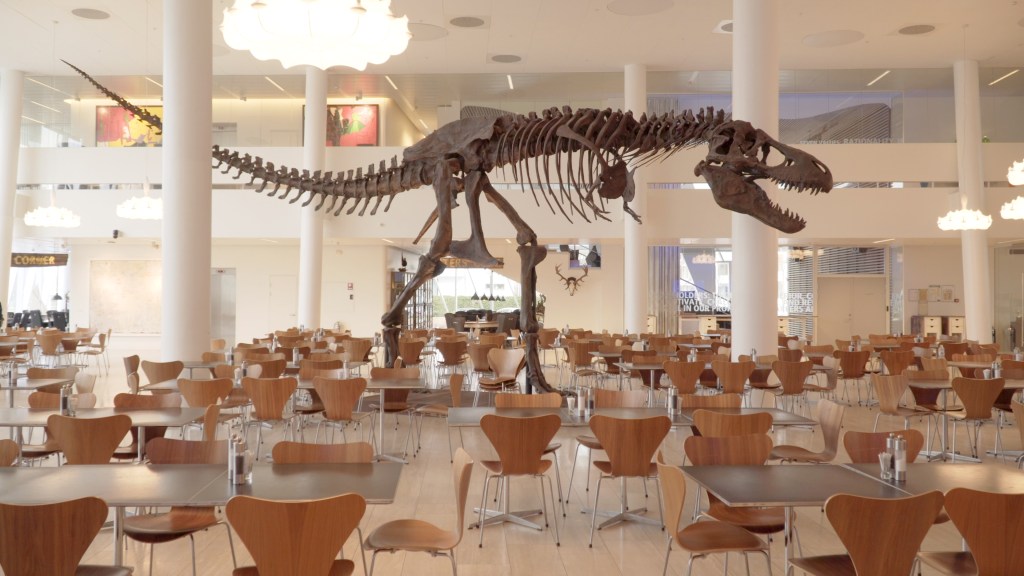
4K HD video and sound, single screen, 25:56 min
A guided tour of Saxo Bank’s headquarters in Copenhagen reveals the symbolic and literal wealth of artworks and other exhibits acquired by the firm to furnish its offices and inspire and motivate its employees.
The ‘Saxo Collection’ is a prime example of a corporate art collection, a powerful tool to embody and project the values of a company, internally as well as to the outside world. Art is deployed to contaminate the world of finance with its ambitious ideas, and vice-versa.
JULY 5 – 26
Arshia Zeinali, How Should One Wait for Godot, 2021
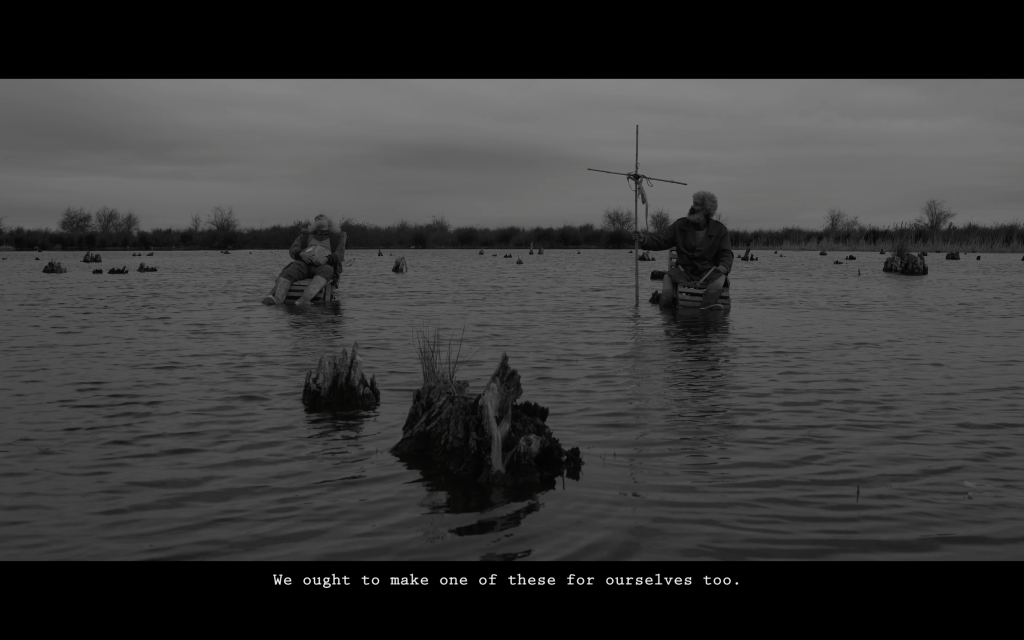
4K HD video and sound, single screen, subtitled, 28 min
A free adaptation of Samuel Beckett’s most-known plays, Waiting for Godot and Endgame, Arshia Zeinali’s film comprises a sequence of scenes where two men idle away the time while waiting in vain for a third person named Godot.
Marginalized and disempowered, the two main characters depend on an external force to arrive and provide direction. Doubt creeps in: perhaps they have not been waiting the right way?
The obsessive repetitiveness of the dialogues and the post-apocalyptic dreariness of the different settings enhance the overall sense of resignation. However, despite their dependency, they express scepticism and frustration and even contemplate leaving Godot behind. Ultimately, the purpose of their loitering gets replaced, with the end hinting at a clean slate.
While embracing Beckett’s critical examination of power structures and the dehumanization of capitalistic societies resulting from the relentless pursuit of outer validation, Zeinali leaves space to envision an alternative solution to the freefall of life. If humanity fails to find a way out on its own, there will not be a saviour coming to the rescue either.
AUGUST 2 – 30
Lucille Groos, Emotion Rules Alone, 2022
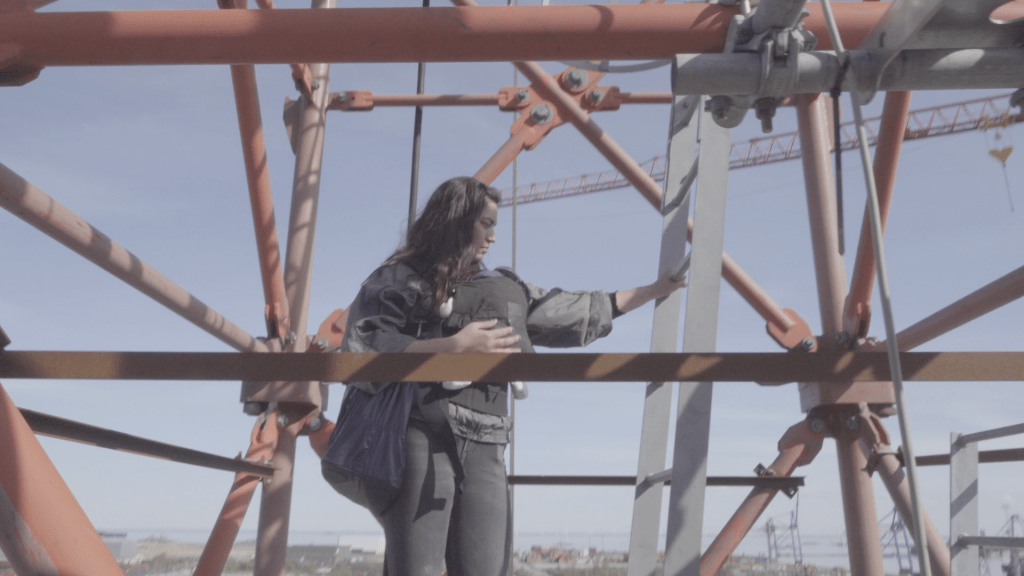
HD video and sound, single screen, 8:25 min
An orchestra of electrical outlets, a dead fly that is swept around construction sites and a young mother who climbs a crane while carrying her baby and threatens to jump if not given an affordable home before nightfall. Lucille Groos’ début video poetically comments on how the neoliberalist system chooses profit before people and how this tyranny undermines the intuitive purpose of being alive.
The work is Groos’ interpretation of the true story told by Helke Sander in the 1985 social-realist film From the Reports of Security Guards & Patrol Services No. 1, while the title is borrowed from a poem in the 1998 science fiction book Parable of the Talents by Octavia Butler, set against the backdrop of a dystopian 21st-century United States led by violence, racism and greed.
Through a series of moving pictures, the video highlights the absurdity of a world that seeks progress for progress’s sake, and how quick solutions aimed at profit are mirrored by quick solutions made in desperation to survive.
SEPTEMBER 6 – 27
Jannous Nkululeko Aukema, Deliver Me, 2021
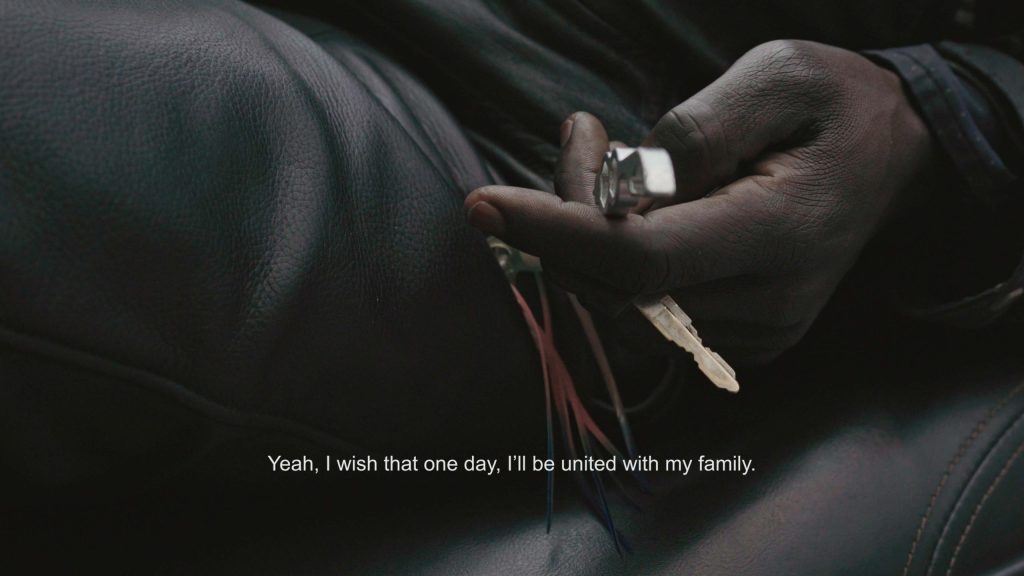
Traversing Cape Town’s deserted inner city on his delivery bike, Paul Mwasi, a Malawian immigrant new to the city, irks out a life during the surreal months of Corona lockdown. Delivering food door to door, he meets a world of gates, empty streets and silent stares; his only lifeline is a cellphone connecting him to his work and his family, digital faces illuminating him.
Paul’s personal journey is a signifier of the lonesome months of a world pandemic and, more generally, of the isolation in an unknown place. The solitary circumstances Paul toils in are the conditions under which most African migrants live and labour in South Africa – an invisibility constantly threatened by a salient xenophobia that simmers all around them.
Deliver Me is at once an exploration of migrant and longing, and a reminder of what it means to labour under the throws of the dark shadows of late post-colonial capitalism.
OCTOBER 4 – 25
Malika Zouhali-Worrall, Video Visit, 2021
HD video and sound, single screen, partly subtitled, 22:44 min
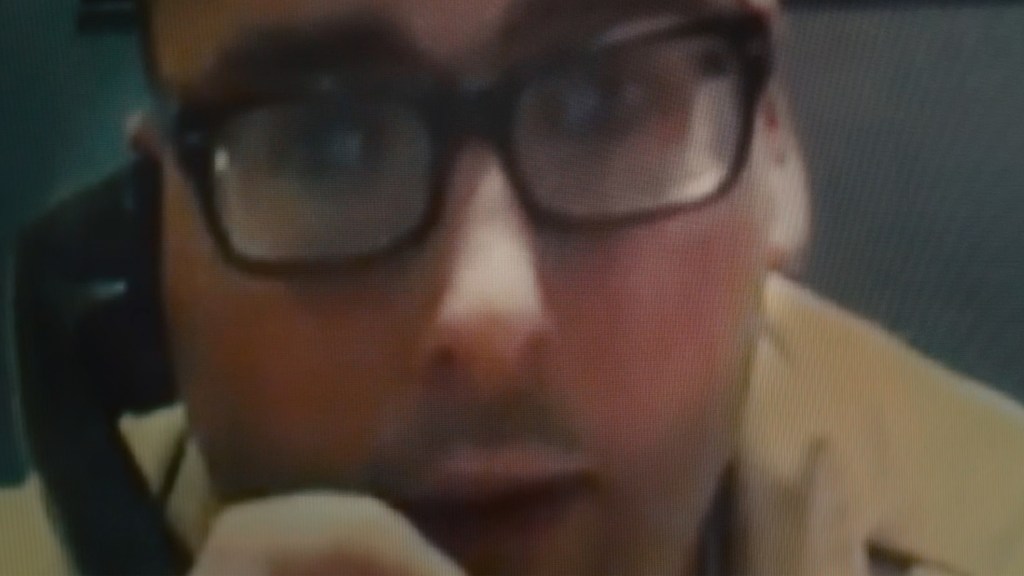
Each week, scores of people visit the Brooklyn Public Library to see their incarcerated loved ones via a free video call. For many, the imperfect, virtual interactions of the so-called video visits are preferable to the traumatizing and humiliating process of travelling to New York City’s notorious Rikers Island jail. Video Visit tells the story of two mothers and their sons, and the librarians who negotiate daily with the Department of Corrections (and a growing for-profit prison telecoms industry) in an effort to keep the families connected.
Through the film, Malika Zouhali-Worrall captured the structural tensions inherent in the U.S. prison system and highlighted the continued efforts by U.S. public libraries to establish networks of care that could fill the social services void left by federal and local governments. While the library workers and patrons are trying to solve the devastating problem of traumatic prison visits, the remote communication program itself can never be a solution to the inhumane conditions created by mass incarceration.
By calling attention to themes of creeping surveillance, family separation through detention, as well as the mundane brutality of both bureaucratic power and the supposedly “neutral” technology companies that are profiting from incarceration, Video Visit provokes a conversation about institutional care versus institutional violence, to ask: who are these institutions serving?
NOVEMBER 1 – 29
Aya Momose, Flos Pavonis, 2021

4K video and sound, single screen, subtitled, 30:11 min
In January 2021, a law implementing a near-total ban on abortion was enacted in Poland amidst the COVID-19 pandemic. At least three women have died since as a result of being denied a therapeutic pregnancy termination.
At the same time, gender inequality is a stubbornly entrenched problem in Japan. It ranked 120 out of 156 countries in the World Economic Forum’s Global Gender Gap Index Report 2021, which measures the gap between men and women in political representation, economic empowerment, education and health. This puts Japan at the bottom of the ladder among the developed world.
In Flos Pavonis, Aya Momose follows the film correspondence format, traditionally used in Japanese diary films, to unfold an exchange between herself and Natalia, a female activist living in Poland. The two women use the plant Flos Pavonis – the “peacock flower” once employed as an herbal abortifacient by enslaved Africans brought to the colonial Caribbean – as a clue to their reflections on sex, intimacy, identity and freedom.
Moving back and forth between visual and oral communication, which sometimes take the form of introspective soliloquies, the film highlights to which extent the female body is still tossed about by the authoritarian power. To counteract this, the two young women draw on technology and imagination to regain control over their fates and choose to cultivate care and connection as a concrete act of protest.
DECEMBER 6, 2023 – JANUARY 3, 2024
Linnea Langfjord Kristensen, For the Dial Beckons, 2023
HD video and sound, single screen, subtitled, 41:36 min
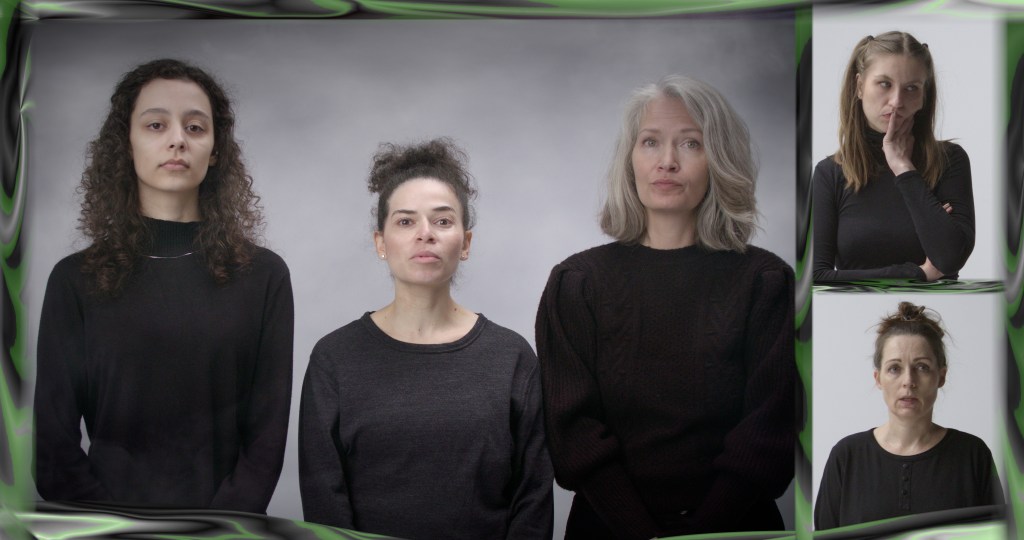
For the Dial Beckons is a poetic and humorous performance film seeking to uncover some of the social and institutional norms that shape our understanding of the “successful individual”.
Bathed in a mysterious glow, the performance starts by following three women talking about a community they have built, based on methods for interpersonal relationships in stark contrast to our contemporary culture’s promotion of personal gain in fast-paced environments. In a society obsessed with self-investment, productivity, and rapid growth, these women have chosen to embrace a radical concept: slowness.
A sudden shift in the atmosphere introduces us to the Moderator, who offers the women a panel discussion to share their unconventional methods with the world. However, the Moderator steers them toward a path of absurd idolisation in front of a swooning audience, straying them from the genuine conversation they intended.
Can the women and their transformative ideas break free from the relentless cycle of performance, competition, and optimisation? Or will they succumb to the machinery of success, driven by the Moderator’s quest to fulfil her potential at any cost?
 paola paleari